Successful solution
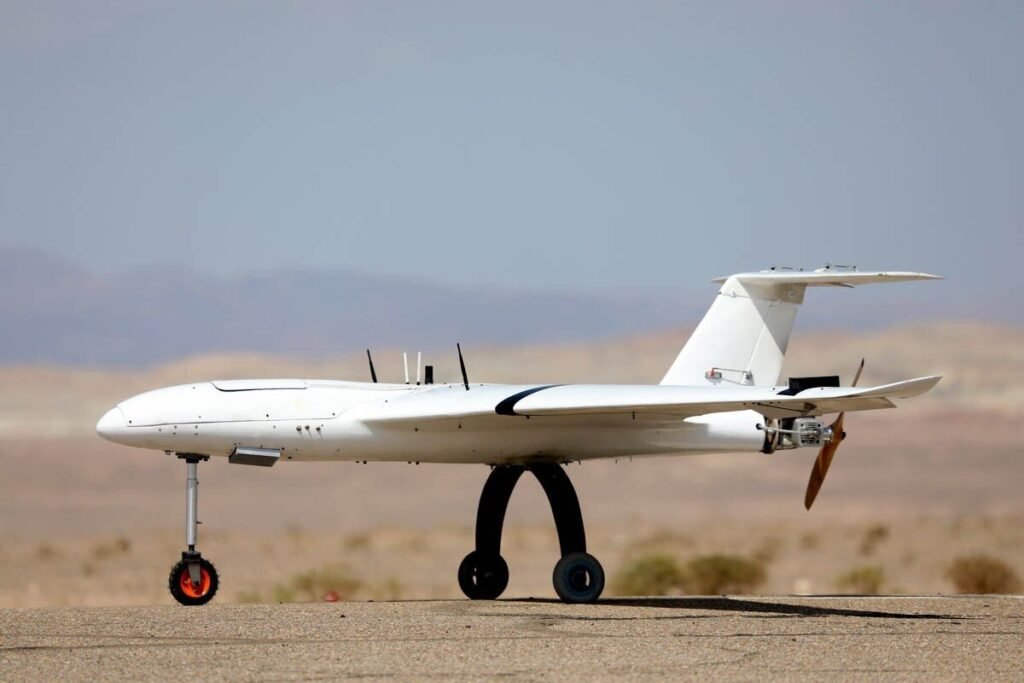
Dragon’s Roar-684I
This drone is equipped with a 684i B4 four-cylinder engine, producing 61.0 horsepower (44.8 kilowatts) and a range of up to 900 kilometers (559 miles).
It uses a Global Navigation Satellite System (GNSS), such as GLONASS or GPS, to fly to a pre-set target coordinate.
The “Dragon Roar 1” has a wingspan of 2.5 meters (8.2 feet), a fuselage length of 3.5 meters (11 feet), and a flight speed exceeding 185 kilometers per hour (115 miles per hour).
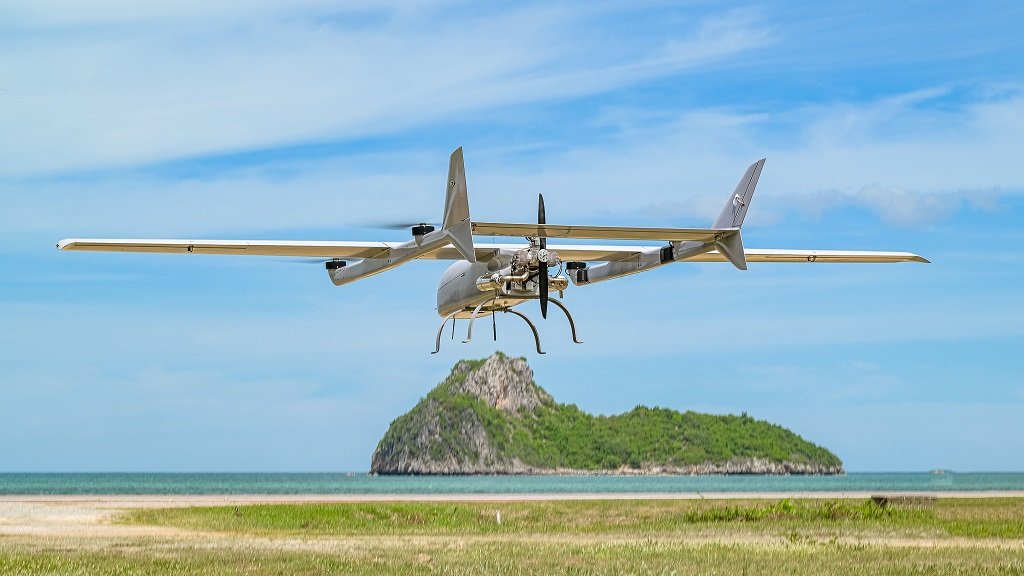
SKY 342i B2
This UAV employs a fuel-powered propulsion concept, combining four rotors for vertical takeoff and landing with a tail drive for horizontal flight.
It uses a 3IPOWER 342I B2 fuel engine as its hybrid power solution.
The VTOL 600h has a wingspan of 6 meters, a maximum takeoff weight of 110 kg, and a payload capacity of up to 25 kg.
Thanks to its hybrid power system, the UAV has a maximum flight time of 10 hours, a cruising speed of 115 km/h, and a maximum speed of 138 km/h.
The MADDOS UAV can be used in military and civilian applications, such as reconnaissance, border control, search and rescue, and public safety.
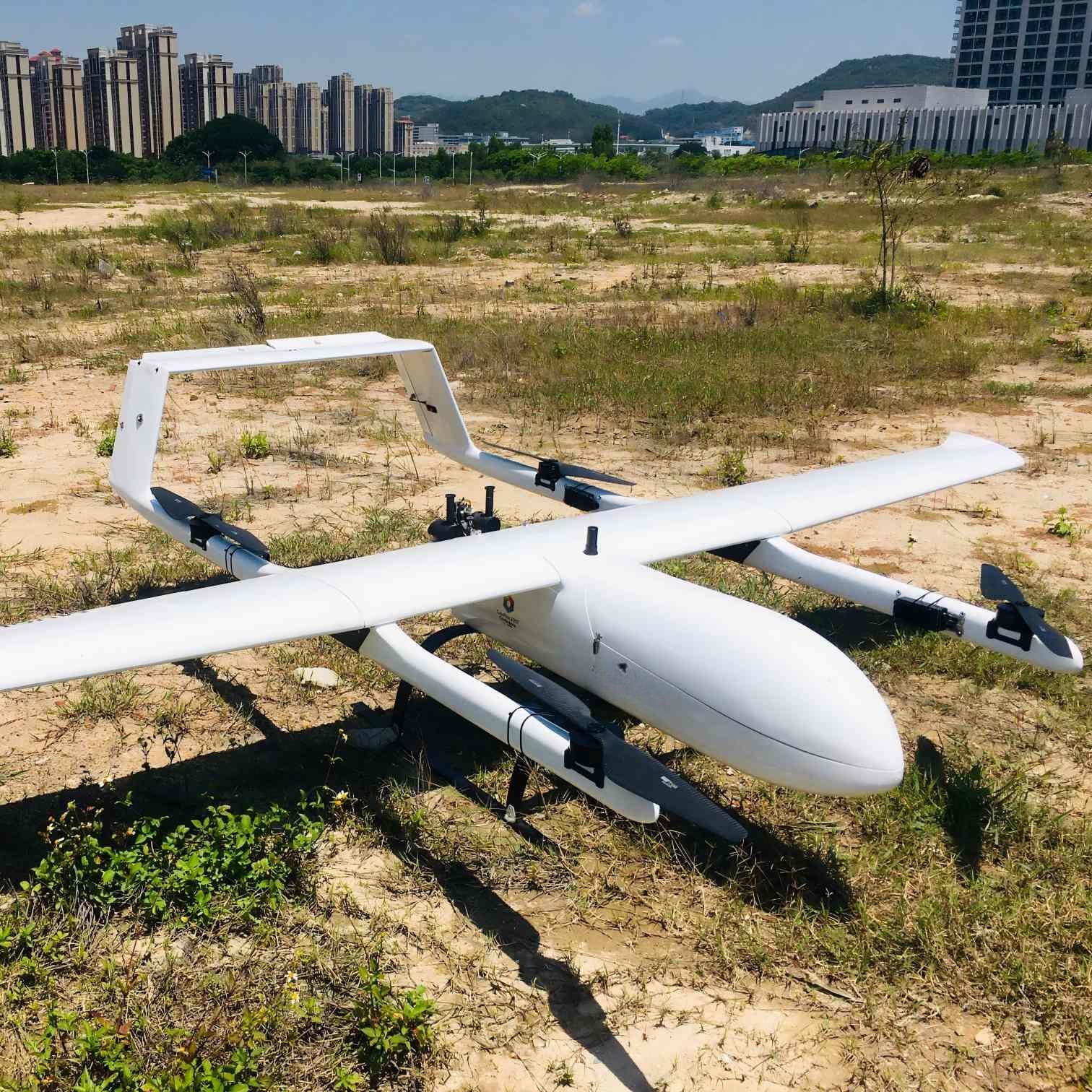
phoenix jet 250I
Design: The Phoenix Jet 250 is a 4600mm wingspan vertical takeoff and landing (VTOL) drone powered by a 250cc four-cylinder gasoline engine. Its fuselage is constructed entirely of carbon fiber, making it lighter and more durable than fiberglass or composite materials. A quick-release design facilitates assembly and disassembly.
Performance: The drone has a cruising speed of 21-24 m/s and a maximum speed of 30 m/s. With an 8 kg payload, it has an endurance of up to 3 hours; without a payload, the maximum flight time exceeds 4 hours.
Payload and Applications: The maximum payload is 8-10 kg. The Phoenix Jet 250 drone platform is widely used in various industries, including industrial inspection, oil and gas, precision agriculture, surveying, public safety, construction, and defense.
Recommended configuration: It is recommended that the Phoenix Jet 250 use the CUAV X7+ Pro autopilot as the flight system and the CUAV C-RTK 9Ps positioning GNSS module to achieve high-precision takeoff and landing and real-time high-precision navigation.
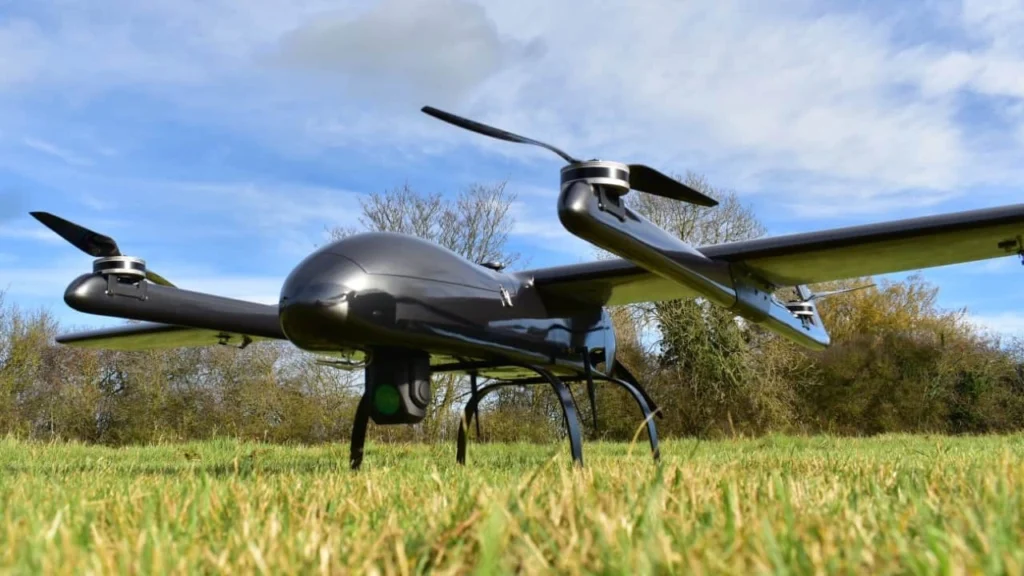
spiritof 342i
Design: The Spiritof 342i is a 5500 mm wingspan vertical takeoff and landing (VTOL) drone powered by a 342i B2 twin-cylinder gasoline engine. Its fuselage is entirely constructed of carbon fiber, making it lighter and more durable than fiberglass or composite materials. A quick-release design facilitates assembly and disassembly.
Performance: The drone has a cruising speed of 30-35 m/s and a maximum speed of 45 m/s. With an 8 kg payload, it has an endurance of up to 3 hours; without a payload, the maximum flight time exceeds 4 hours.
Payload and Applications: The maximum payload is 15 kg. The Spiritof 342i drone platform is widely used in various industries, including industrial inspection, oil and gas, precision agriculture, surveying, public safety, construction, and defense.
Recommended configuration: It is recommended that the Spiritof 342i use the CUAV X7+ Pro autopilot as the flight system and the CUAV C-RTK 9Ps positioning GNSS module to achieve high-precision takeoff and landing as well as real-time high-precision navigation.
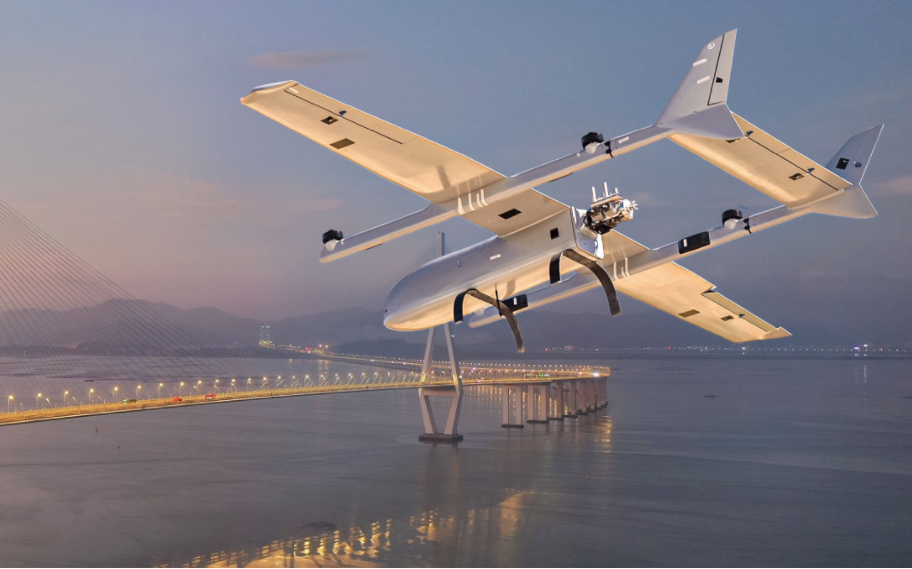
nexus 380I
Design: The Nexus 380I is a 3800mm wingspan vertical takeoff and landing (VTOL) drone powered by a 380I B4 four-cylinder gasoline engine. Its fuselage is entirely constructed of carbon fiber, making it lighter and more durable than fiberglass or composite materials. A quick-release design facilitates assembly and disassembly.
Performance: This drone has a maximum cruising speed of 150 km/h and a maximum flight altitude of 5000 meters. With a 15 kg payload, it has an endurance of up to 1.5 hours; without a payload, the maximum flight time exceeds 2 hours.
Payload and Applications: The maximum payload is 20 kg. The Nexus 380I drone platform is widely used in various industries, including industrial inspection, oil and gas, precision agriculture, surveying, public safety, construction, and defense.
Recommended configuration: It is recommended that the Nexus 380I use the CUAV X7+ Pro autopilot as the flight system and the CUAV C-RTK 9Ps positioning GNSS module to achieve high-precision takeoff and landing as well as real-time high-precision navigation.
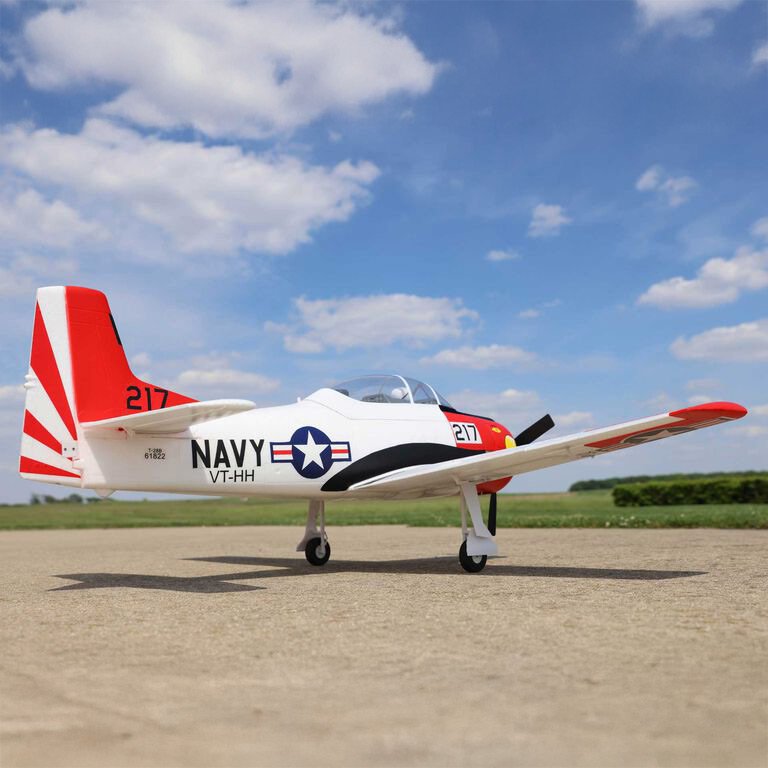
Model aircraft trainer 76I B1
Design: This is a remote-controlled aircraft model produced by E-flite, based on the North American T-28 “Troy” trainer aircraft, equipped with a single-cylinder 76cc engine.
It belongs to the BNF Basic (Bind-N-Fly Basic) version, meaning it does not include batteries and chargers, but it features Spektrum Smart technology.
The aircraft has a wingspan of 1.2 meters and is typically powered by a brushless motor.
This model is suitable for intermediate to advanced remote-controlled aircraft enthusiasts.
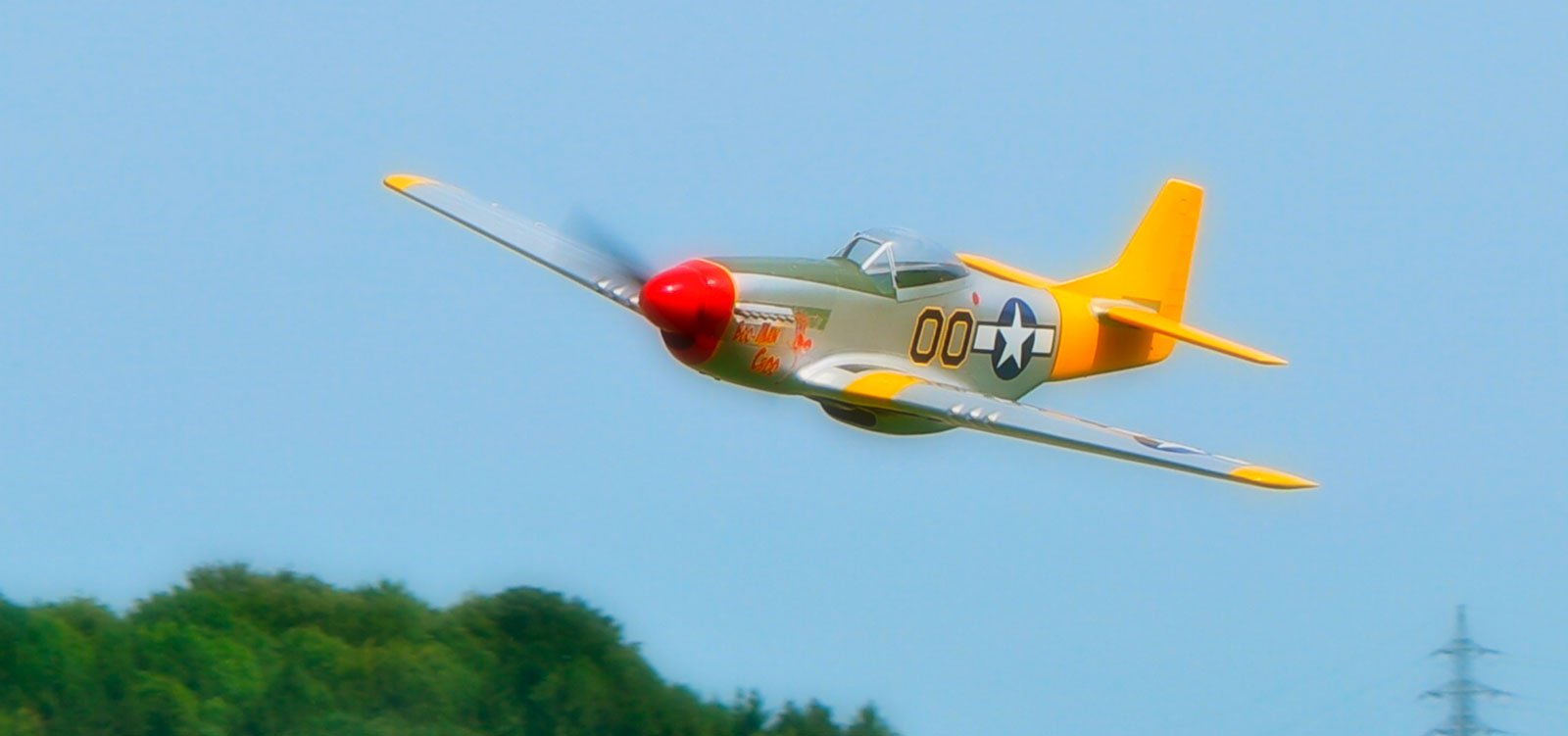
I-51 Mustang Remote Control Model Airplane
The I-51 Mustang remote-controlled model aircraft. Equipped with a single-cylinder 50cc engine, the E-flite UMX I-51D “Miss Detroit” BNF Basic or Arrows Hobby I-51 Mustang 1100mm PNP.
The E-flite UMX I-51D “Miss Detroit” is an ultra-miniature remote-controlled aircraft featuring AS3X and SAFE Select technologies.
The Arrows Hobby I-51 Mustang 1100mm PNP is a plug-and-play remote-controlled aircraft, typically equipped with electrically retractable landing gear.
The I-51 Mustang was a famous fighter aircraft of World War II, a symbol of Allied air power.
“UMX” stands for “ultra-miniature,” and these aircraft typically have a flight weight between 3.5 and 4.5 ounces.
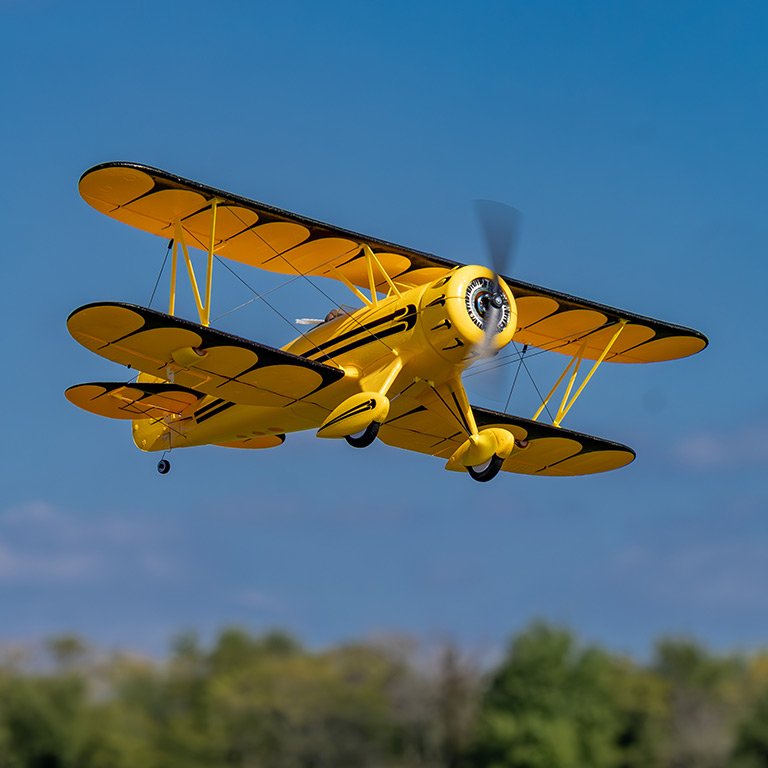
Modern I-3 Biplane
This aircraft belongs to the Ultra-Miniature (UMX) remote-controlled aircraft family. It is equipped with a single-cylinder 32cc engine and features AS3X and SAFE Select technologies. The AS3X gyroscope system helps counteract external forces such as wind and turbulence, and it is smaller and lighter than many other remote-controlled models, resulting in smoother flight.
Comprehensive Unmanned Aerial Vehicle (UAV) System Service Center
Design, development, maintenance, and testing.
Engineering Design and Development
Mechanical, electrical, aerospace, and physics engineers. Our versatile team of highly trained and skilled unmanned system engineers are here to help you.
Engine and Durability Testing
Using engine break-in stations and dynamometers, 3IPOWER’s field engine testing allows you to test your propulsion system before takeoff.
On-site certified pilot
We provide comprehensive protection for you. We are familiar with relevant regulations, operating procedures, and processes to ensure flight safety.
Legal compliance
You can rest assured that 3ipower has comprehensive data reporting and continuous improvement processes covering every stage from training to system delivery. 3ipower complies with AS9100 standards in engine design, production, and maintenance.